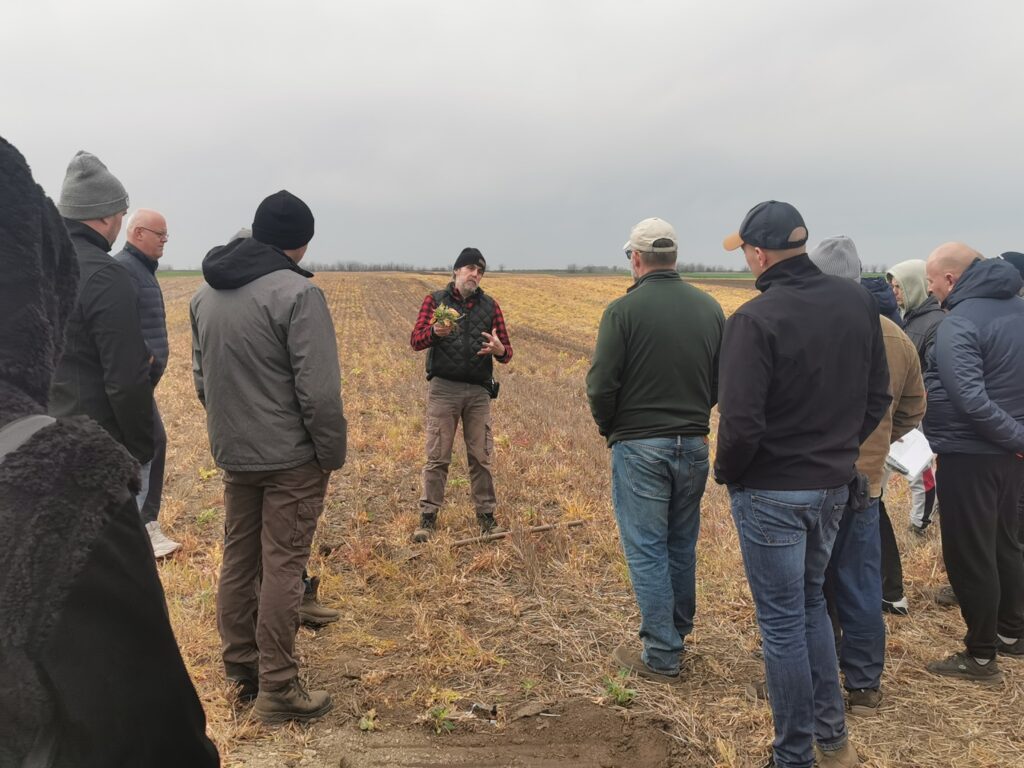
There is no better place for learning and networking than directly in the field. Recently, representatives of the RegAgri Alliance (Savez za regenerativnu poljoprivredu Srbije), which is coordinated by the Association of Balkan Eco-Innovation (ABE)—attended a hands-on field meeting organized by the Association of Regenerative Farmers of Serbia (URPS).
Held directly on agricultural plots in Bajmok, the gathering brought together around twenty regenerative farmers from across the Vojvodina region. The primary goal of this meeting was to welcome new URPS members, gain direct insight into the real-world application of regenerative practices, and exchange crucial information and ideas among farmers.
Seeing regenerative practices in action
A tour of the arable crops in Bajmok, which are cultivated strictly according to the principles of regenerative agriculture, showcased excellent practical results. The health of the soil and the crops spoke for themselves.
However, beyond touring the fields and exchanging agronomic advice, the meeting opened up vital, strategic discussions about the ongoing issues troubling producers who want to transition to a more sustainable business model.
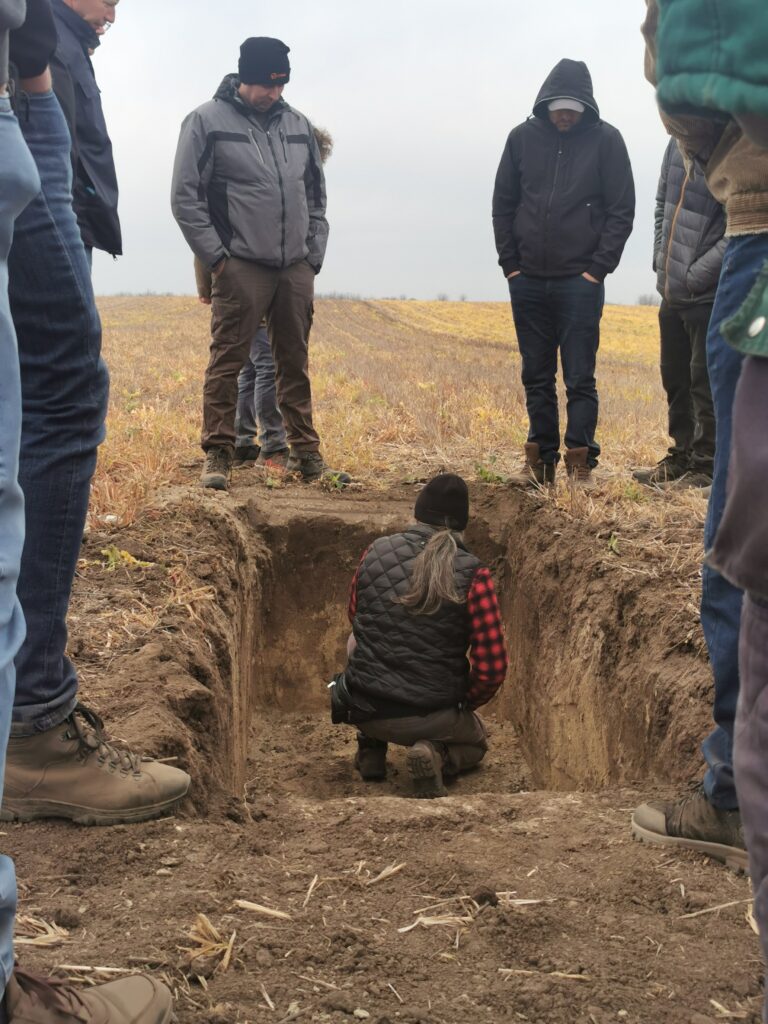
What are the biggest challenges for regenerative agriculture in Serbia?
During a highly constructive discussion, the participants identified three key obstacles currently hindering the wider adoption of regenerative agriculture in the region:
- Barriers within the IPARD program: A major topic of discussion was the accessibility and attractiveness of European subsidies. Farmers pointed out limiting factors in Serbia that reduce their motivation to use IPARD funds for transitioning to regenerative practices. Complex administrative procedures and the fact that certain measures are not tailored to the specific needs of regenerative production remain significant barriers.
- Supply chains and storage problems: Farmers highlighted a real market challenge: preserving the added value of their products. When selling and storing goods in large, conventional systems, farmers face logistical difficulties in physically separating regeneratively grown crops from conventional ones. Without adequate separation, producers lose the opportunity to sell their premium goods at premium prices.
- Defining clear regenerative criteria: To prevent the misuse of the term “regenerative” on the market (greenwashing), clear rules must be defined. Meeting participants exchanged views on the strict requirements, from tillage reduction to biodiversity enhancement, that must be met for a farm to be officially recognized and certified as regenerative.
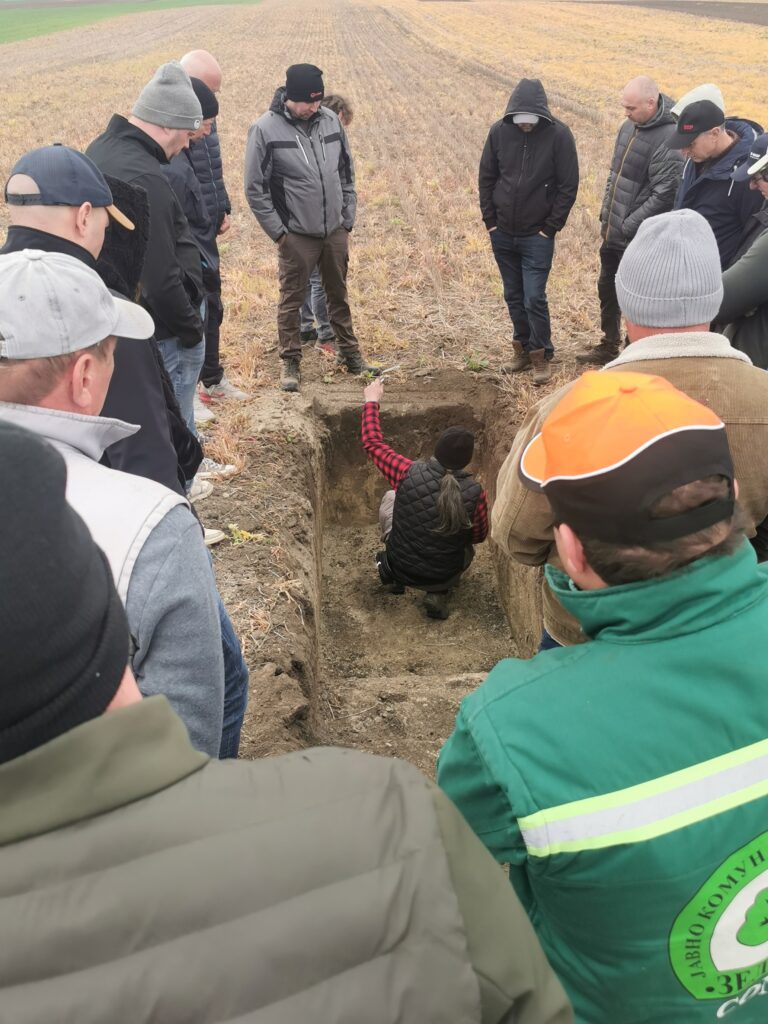
The importance of empowering farmer associations
The meeting in Bajmok reaffirmed that joint effort, continuous networking, and open on-the-ground conversations are essential steps for overcoming these obstacles.
Building a fairer agricultural system, one that adequately values the hard work of producers and the health of our soil, requires the ongoing collaboration of all stakeholders in the agricultural sector. As the coordinator of the RegAgri Alliance, ABE remains deeply committed to addressing these subsidy issues, improving supply chain logistics, and establishing clear standards for the future of regenerative agriculture in Serbia.