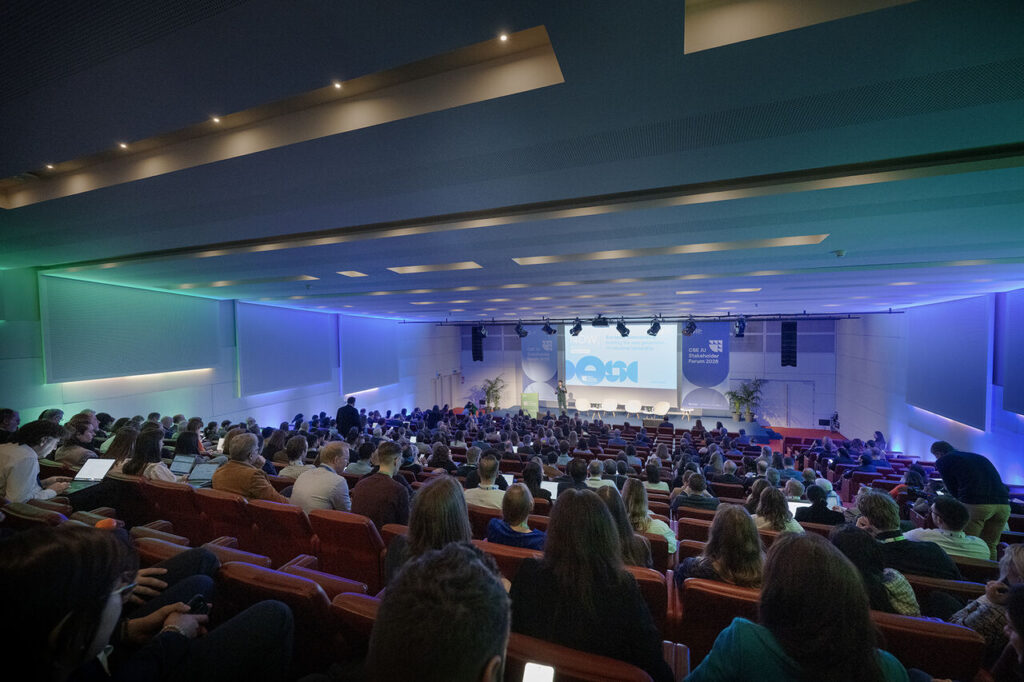
The transition from research to real-world impact is officially underway. Recently, the Circular Bio-based Europe Joint Undertaking (CBE JU) hosted its second Stakeholder Forum in Brussels, gathering around 400 participants from 40 countries. ABE was represented at the event by our colleague Vesna, joining start-ups, researchers, investors, and policymakers to discuss how the bioeconomy can drive sustainable economic growth.
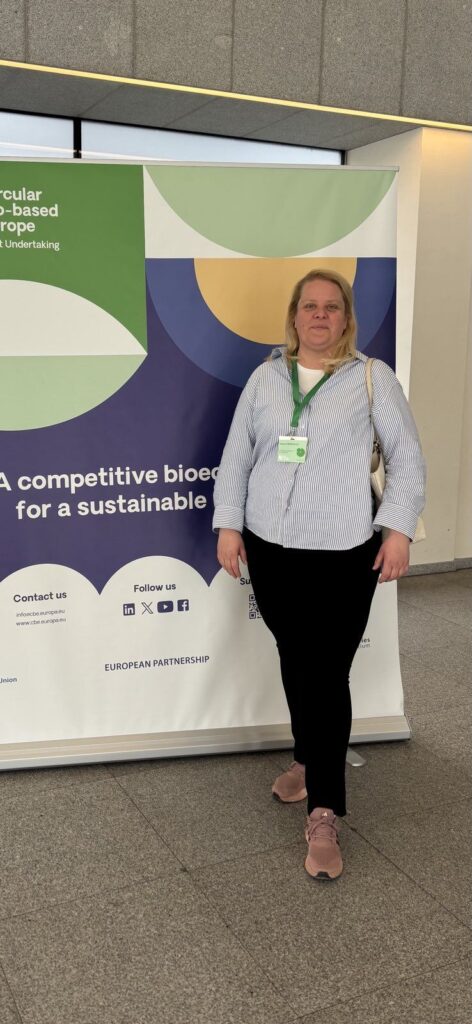
The overarching theme of the forum, “Driving Impact – Bio-based innovation for a competitive, sustainable Europe,” highlighted that Europe has the energy, expertise, and entrepreneurial spirit needed to advance circular industries. However, the focus must now shift entirely toward industrial deployment and scaling.
The numbers behind the bioeconomy boom
The discussions at the CBE JU Stakeholder Forum were backed by powerful data demonstrating that the bioeconomy is a strategic component of Europe’s industrial base.
As highlighted by our colleague Vesna, the latest figures show that the biomass-producing and converting sectors of the EU bioeconomy generated €812 billion in value-added in 2022, representing approximately 5.0% of the EU’s GDP and created 17.2 million jobs, accounting for 8.0% of total EU employment.
Three critical enablers for scaling success
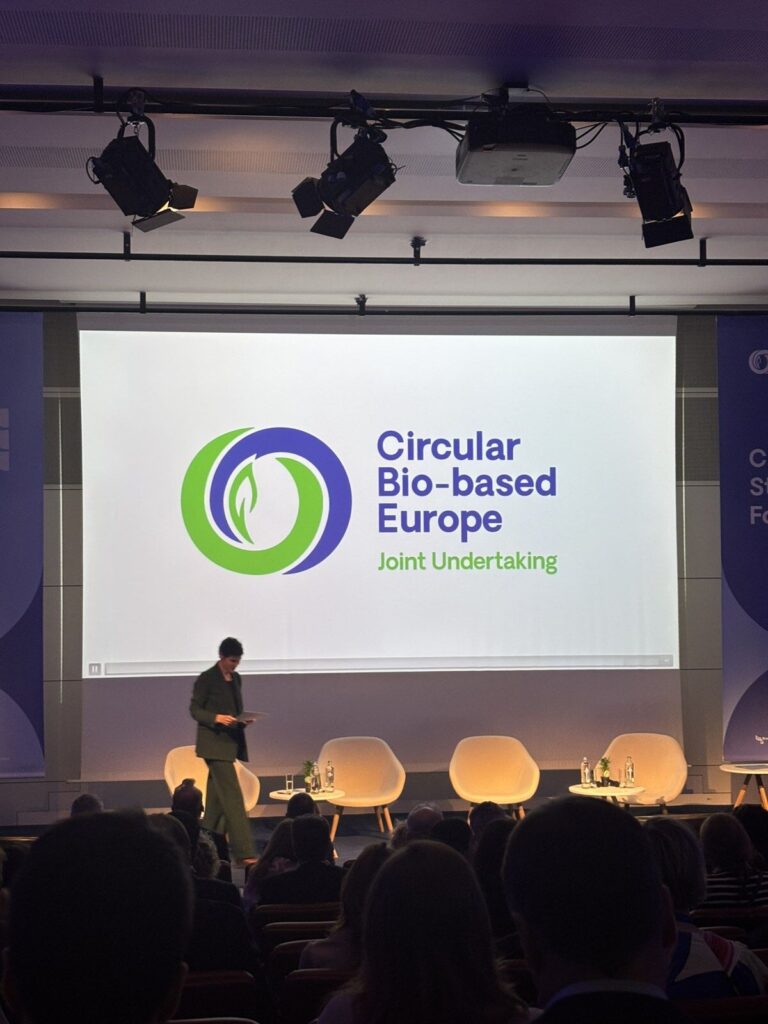
For the past decade, CBE JU has built partnerships to transform breakthrough ideas into industrial realities. To move faster from innovation to deployment, speakers at the forum emphasized three critical enablers:
- Regulation as an accelerator: Smart, well-aligned regulations (such as the upcoming Biotech II Act and Circular Economy Act) can create sustainable markets and turn constraints into competitive advantages.
- Funding for scale-up: While early-stage grants are vital, strong financial mechanisms are now essential to bridge the “second valley of death” and enable full-scale commercial deployment.
- Collaboration and ecosystem diversity: Cross-sector partnerships are crucial for strengthening knowledge exchange, aligning innovation with industrial needs, and promoting practical scaling solutions.
From lab to market
A major highlight of the event was the exhibition of 50 bio-based solutions developed by CBE JU-funded projects. Participants were given a first-hand look at commercially viable technologies reshaping various sectors.
Key innovations on display included:
- Bio-based polymers designed for enhanced recyclability
- Novel biomaterials for construction and packaging
- Advanced agricultural inputs derived from non-food biomass
- Next-generation textiles developed via sustainable processes
- Bio-based alternatives replacing traditional chemicals
Looking ahead
The CBE JU Stakeholder Forum made one thing clear: the evolution of the bio-based sector will depend on the continued alignment between policy frameworks, investments, and industrial capabilities.
At ABE, we are highly encouraged by this transition. As Europe continues its journey toward a more circular, bio-based economy, we remain committed to supporting the innovations, cross-border collaborations, and practical solutions that will keep the region competitive and sustainable.
Source: CBE-JU