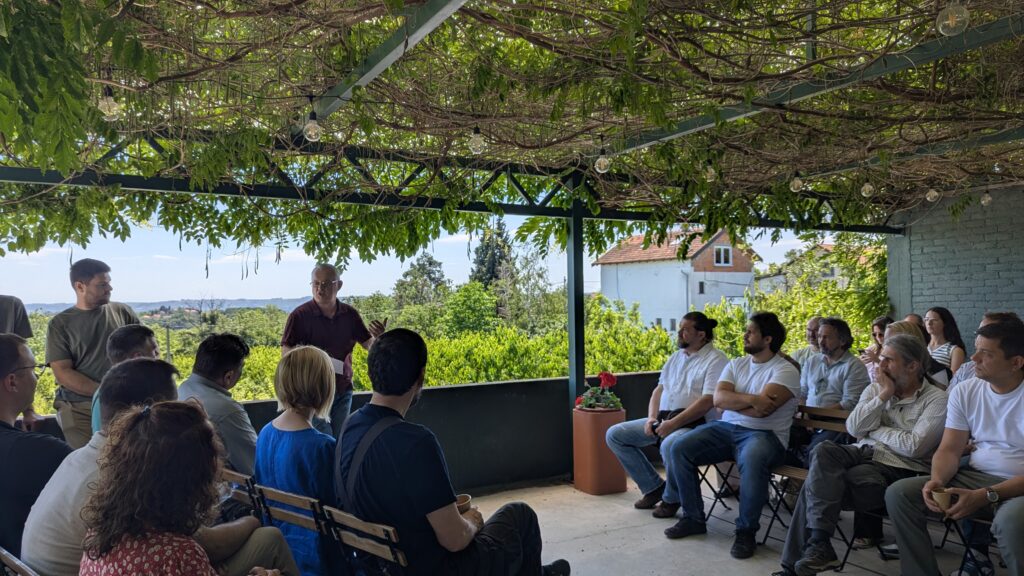
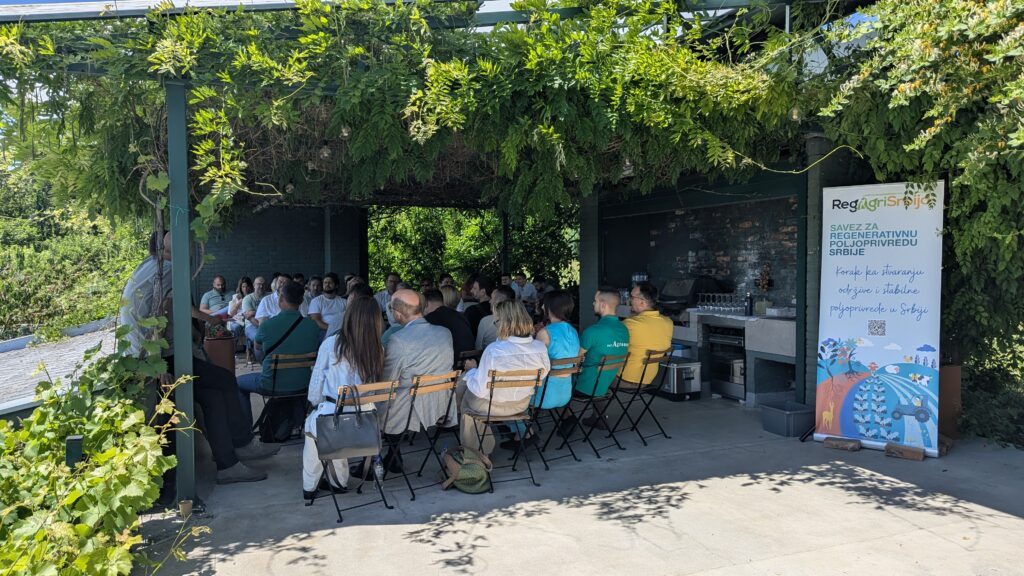
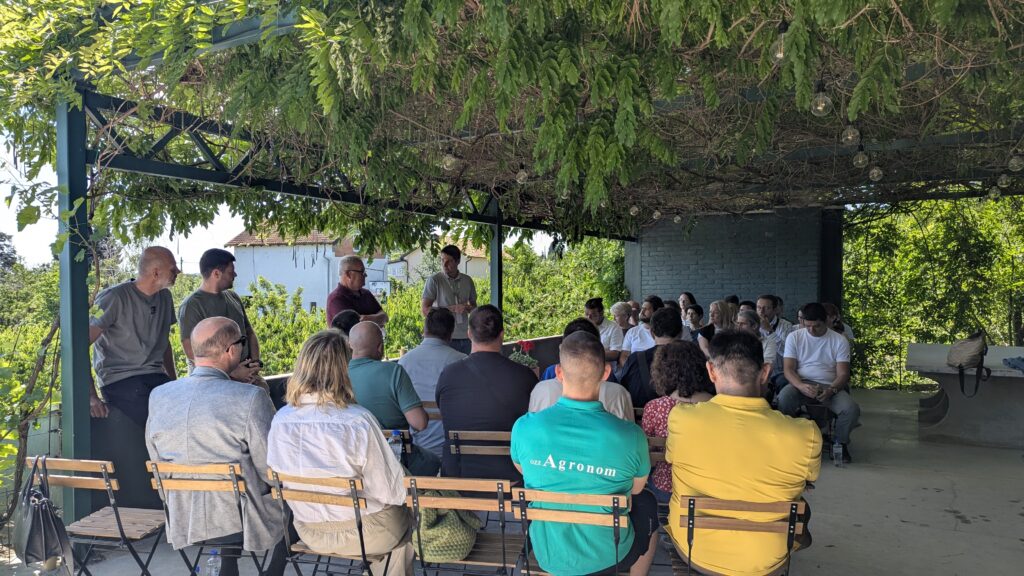
The Alliance for Regenerative Agriculture of Serbia (RegAgri Alliance), coordinated by ABE, recently hosted another highly successful Field Day at the renowned Plavinci winery.
When owners Branislav and Jasmina Anđelić started their journey in 2008, they faced a challenge common to many farmers in the Balkans: soil that had been neglected for a decade. While their initial goal was organic certification, they quickly realized that “organic” is not synonymous with “regenerative.” While organic farming often focuses on avoiding synthetic chemicals, regenerative agriculture actively restores the ecosystem. Their mission shifted towards regenerating the soil’s living web: the key to building humus and fixing nitrogen naturally.
The problem: Why soil becomes “Dead”
For decades, conventional practices in Serbia, such as deep plowing, have severely damaged soil microbiology. Turning the soil buries aerobic organisms (which need oxygen), causing them to suffocate, while exposing anaerobic organisms to the surface where they perish. Combined with mineral fertilizers and pesticides that kill beneficial microbes, and bare soil that can reach temperatures 10°C higher in summer, the result is rapid moisture loss, erosion, and the destruction of the humus layer.
At Plavinci, Branislav and Jasmina rejected this model. Instead, they adopted a systemic regenerative approach:
- No deep plowing: The soil is only mowed. There is no discing or rototilling that disrupts soil structure.
- Soil never bare: Cover crops (green manure) like field peas protect the soil from overheating and erosion.
- Microbiological inoculation: Use of compost prepared via biodynamic principles and microbial preparations accelerates the return of beneficial organisms.
- Zero pesticides: Reliance on the plant’s natural immunity and beneficial insects.
- The secret weapon: Compost Tea and Biodynamic Preparations
Biodiversity as a defense strategy
Perhaps the most striking innovation is the use of biodiversity as a pest control mechanism. Instead of broad-spectrum insecticides, 7% of the vineyard area is dedicated to habitats for beneficial insects. By planting yarrow, dill, and coriander, and installing “winter hotels” made of brushwood, Plavinci ensures that natural predators are present the moment pests appear.
A self-sustaining ecosystem
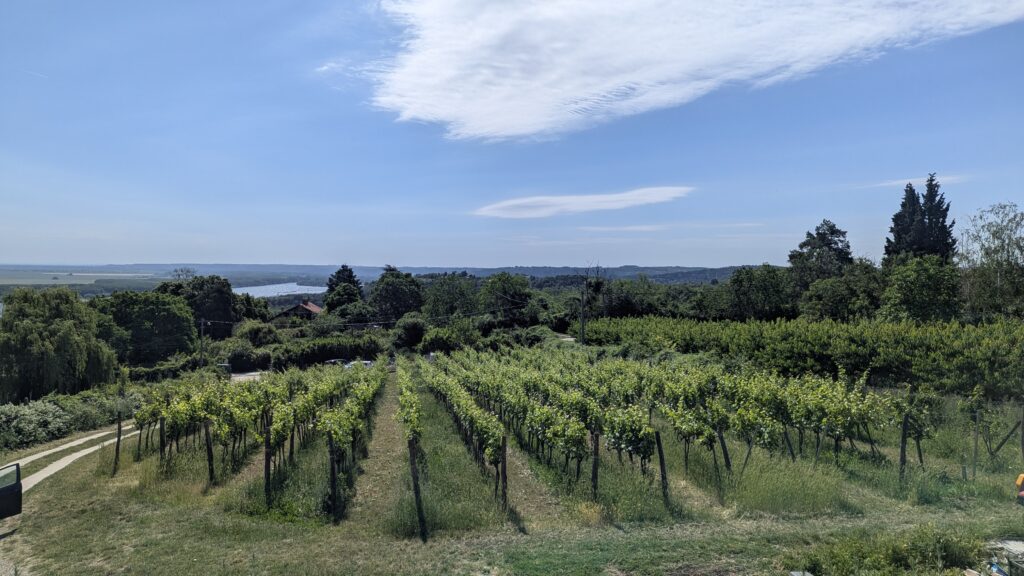
The outcome of this dedication is a vineyard that, since 2014, has used no fertilizers other than green manure and compost tea. The vines have developed a natural immunity to diseases like downy mildew, proving that regenerative agriculture is economically viable and ecologically superior.
The story of Plavinci winery is a beacon of hope for the Balkan agrarian sector. It proves that with the right knowledge and commitment, farmers can restore their land, reduce costs, and produce high-quality crops in harmony with nature.
ABE and the RegAgri Alliance will continue to support such initiatives, connecting stakeholders, facilitating research, and promoting results to policymakers and citizens alike.